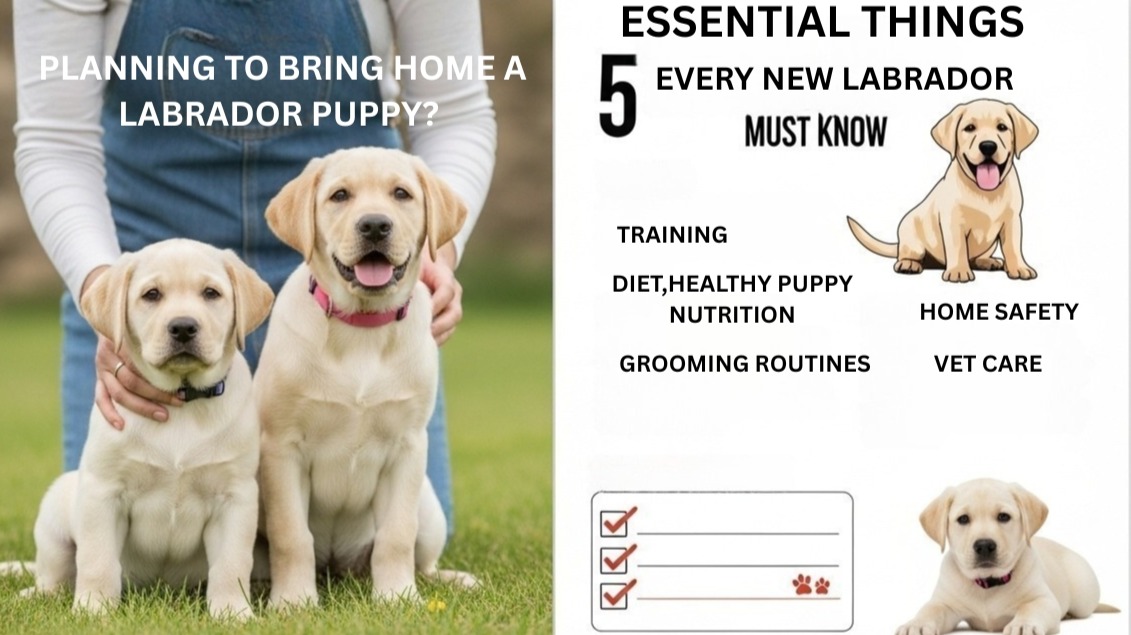

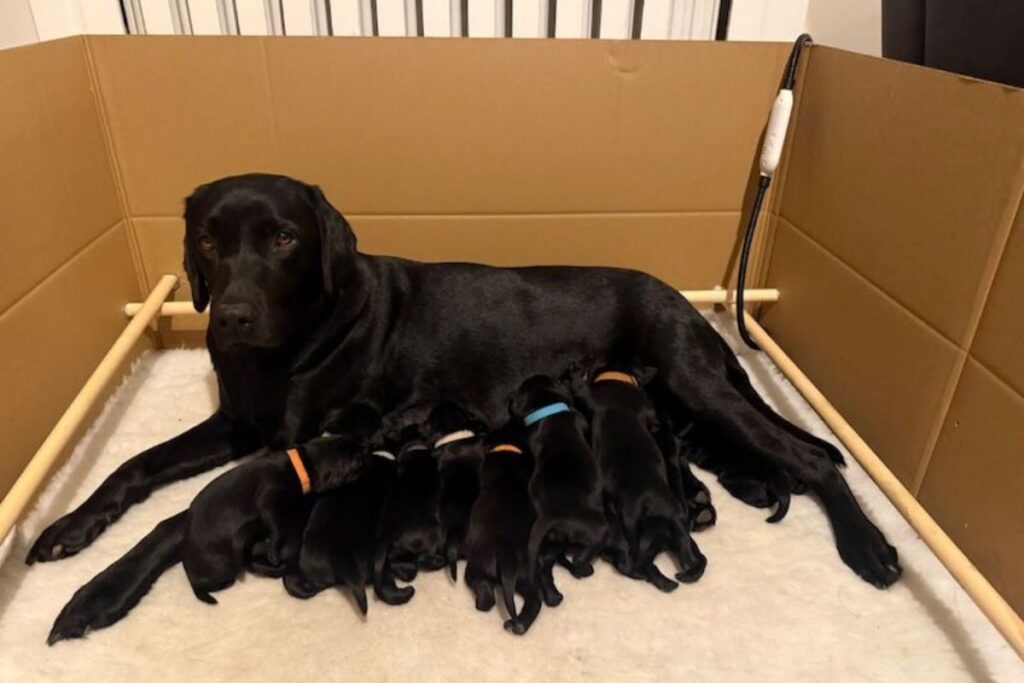
Bringing home a Labrador Retriever puppy is one of the most exciting milestones in a dog owner’s life. Labradors are loyal, intelligent, and deeply affectionate companions — but those qualities do not appear on their own. They are shaped by the environment, routine, and care that a puppy receives in its earliest weeks and months at home.
This complete Labrador Retriever puppy care guide covers everything you need to know — from what to feed your puppy on day one to how to handle the first night, when to begin training, how much exercise is appropriate at each age, and how to build the habits that will define your dog’s temperament and health for the rest of its life.
At PurebredLabradorPuppies.com, every puppy we place leaves our home already well-socialised and on a solid early routine. This guide is designed to help you continue that foundation from the moment your puppy arrives.
🐾 The First Week at Home — Setting the Foundation
The first seven days with your Labrador puppy are the most important of its life with you. Everything your puppy experiences in this window — sounds, spaces, people, routines — begins forming its understanding of the world. Getting the basics right early prevents the most common problems new owners face.
What to prepare before your puppy arrives:
- A designated sleeping space — a crate with a soft bed, positioned in a quiet but accessible area
- Food and water bowls — stainless steel is easiest to clean and most hygienic
- High-quality large-breed puppy food — we will advise the brand your puppy is already eating
- Puppy training pads for indoor accidents during the first few days
- A few safe chew toys and a puzzle feeder
- Puppy-proofed space — wires hidden, hazardous items stored, toxic plants removed
Expect your puppy to be overwhelmed for the first 24 to 48 hours. This is normal. A Labrador puppy leaving its litter for the first time is processing an enormous amount of new information. Keep introductions calm, minimise visitors for the first couple of days, and allow your puppy to explore its new environment at its own pace.
Read Our Article
How to Stop Labrador Puppy Biting Fast🧬 Feeding Your Labrador Retriever Puppy
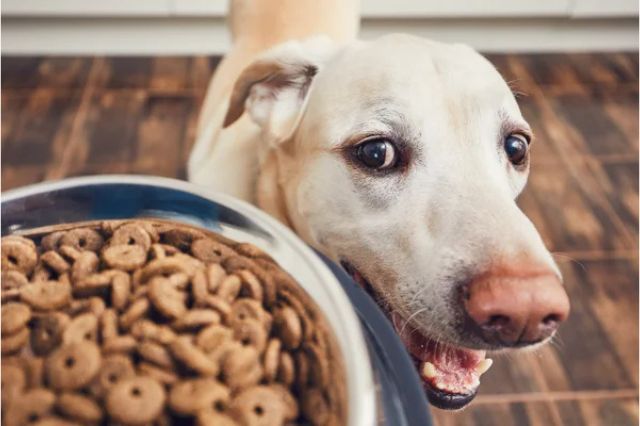
Nutrition is the single most important factor in a Labrador puppy’s early development. Labradors are a large breed with rapid growth rates in the first six months, and the food they eat during this period directly affects bone density, muscle development, and long-term joint health.
Always use a high-quality dry kibble formulated specifically for large-breed puppies. Generic puppy food is not designed to account for the growth rate of a Lab and can lead to nutritional imbalances. Avoid adult dog food until at least 12 months of age.
Labrador Puppy Feeding Schedule by Age:
- 8 to 12 weeks — 4 meals per day, small evenly spaced portions
- 3 to 6 months — 3 meals per day, increase portion size gradually
- 6 to 12 months — 2 meals per day, morning and evening
- 12 months and over — transition to adult food over 7 to 10 days
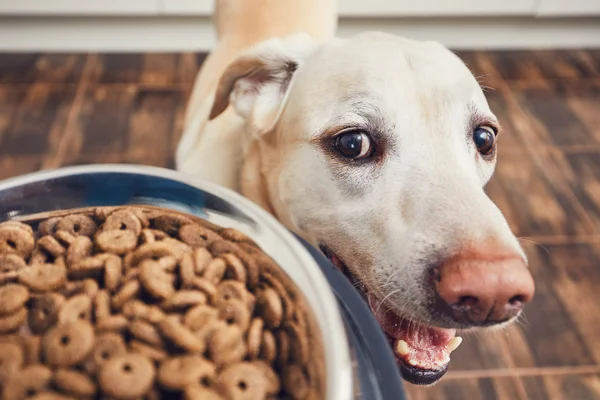
One critical point with Labradors: they will always act hungry. This is a breed characteristic, not a signal to feed more. Labradors are highly prone to obesity, which puts severe strain on joints. Stick to recommended portion sizes, avoid table scraps, and use a measuring cup for every meal.
📅 Potty Training Your Labrador Puppy
Most Labrador puppies can begin potty training from day one at their new home. The earlier and more consistently you start, the faster your puppy will learn. Expect the process to take four to eight weeks before your puppy is reliably clean inside the house.
🐶 The core routine:
- Take your puppy outside immediately after waking, after every meal, after every play session, and before bed
- Use a consistent verbal cue — “go potty” or similar — every time you take them out
- Reward immediately the moment they go outside — not after you go back in
- Supervise your puppy indoors at all times during early weeks — accidents happen in seconds
- Never punish an accident — clean it up without reaction and take the puppy outside immediately
Most Labrador puppies are fully potty trained between 12 and 16 weeks of age with consistent handling. Crate training simultaneously speeds up the process significantly.
Labrador Puppies Breeder Services
Other Services🍂 Crate Training — The Most Valuable Early Habit
Crate training is the most misunderstood aspect of puppy care, and also one of the most valuable. A crate is not a punishment — for a Labrador puppy, a properly introduced crate becomes a safe space, a sleeping den, and the foundation of a settled adult dog.
Dogs are den animals by instinct. A crate gives your puppy a predictable, secure space of its own — which reduces anxiety, speeds up potty training, and prevents destructive behaviour when you cannot supervise directly.
✔️ How to introduce the crate:
- Place the crate in a busy area of the home so your puppy does not feel isolated
- Never force your puppy in — toss treats inside and let them explore at their own pace
- Feed meals inside the crate to build positive associations
- Begin closing the door for short periods while you are in the room, then gradually increase time
- Never use the crate as punishment — it must always be associated with comfort and calm
🏠 Basic Training — Start From Day One
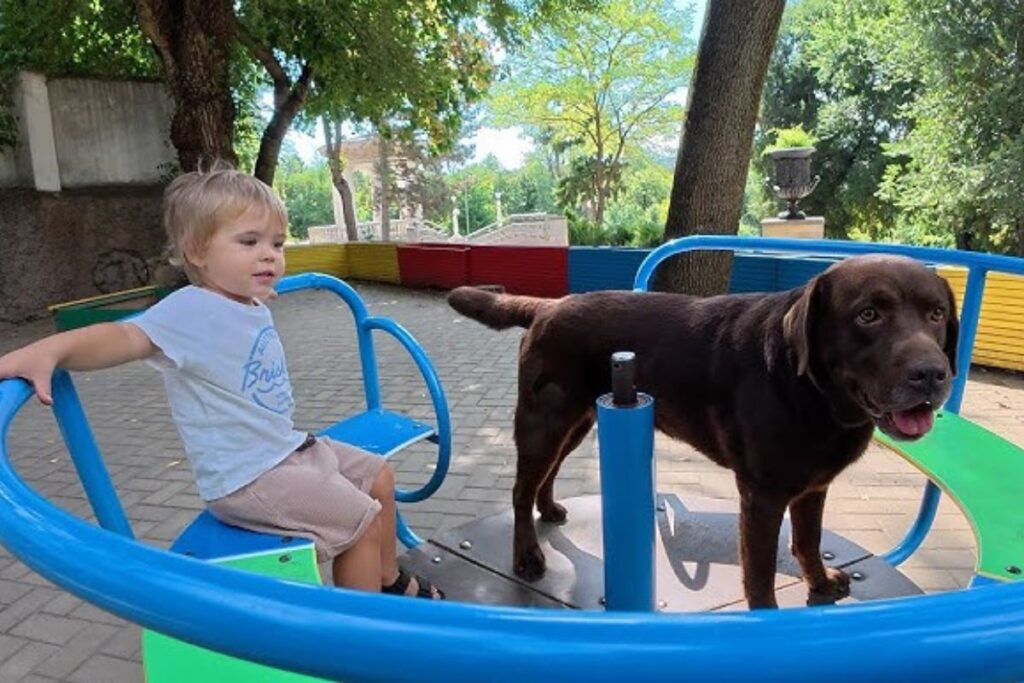
The Labrador Retriever is ranked among the top five most intelligent dog breeds in the world and is widely regarded as one of the easiest to train. Their eagerness to please, food motivation, and social nature make them highly responsive to positive reinforcement from an extremely young age.
Do not wait until your puppy is three or four months old to begin training. A Labrador puppy can begin learning its name, basic commands, and household boundaries from the day it arrives home at eight weeks.
Essential commands to teach first:
- Name recognition – the foundation of all future training
- Sit – the first command that gives you control in daily situations
- Stay – builds impulse control and patience
- Come – the most critical safety command for any dog
- Leave it – essential for a breed that puts everything in its mouth
Training principles that work with Labradors:
- Keep sessions short – 5 to 10 minutes maximum for puppies under 12 weeks
- Always end on a success – never close a session on a failure
- Use high-value treats for new commands, then fade to praise as the behaviour solidifies
- Train every day – consistency is more important than duration
Puppies Care Guide
Other Services🧼 Socialisation — The Window You Cannot Miss
Between eight and sixteen weeks of age, a Labrador puppy is in its critical socialisation window. Experiences during this period — positive or negative — have a disproportionately large impact on how the dog responds to the world as an adult. Missing this window is one of the most common causes of fearfulness and reactivity in adult Labradors.
Socialisation does not mean exposing your puppy to as many things as possible as fast as possible. It means carefully and positively introducing your puppy to a wide range of sights, sounds, surfaces, people, and animals at a pace that keeps the experiences positive.
✔️ What to socialise your Labrador puppy with:
- Different types of people — men, women, children, people wearing hats or uniforms
- Other vaccinated, friendly dogs and puppies
- Traffic, car journeys, public spaces, and different environments
- Household sounds — vacuum cleaners, washing machines, doorbells, television
- Different surfaces — grass, gravel, hardwood floors, stairs, wet ground
- Handling — ears, paws, mouth, tail, and body examination
⚠️ Exercise — How Much Is Too Much?
New Labrador owners are often surprised to learn that puppies need significantly less exercise than adult dogs — and that over-exercising a puppy can cause lasting joint damage. The Labrador Retriever is particularly susceptible to hip and elbow dysplasia, and high-impact repetitive exercise on developing joints increases this risk. The standard guideline for Labrador puppy exercise is five minutes per month of age, twice daily. So an eight-week-old puppy needs only ten minutes of exercise twice a day. A twelve-week-old needs fifteen minutes. A six-month-old needs thirty minutes.
❌ Exercise guidelines by age:
- 8 weeks — 10 minutes twice per day, gentle play in the garden
- 12 weeks — 15 minutes twice per day, short leash walks and play
- 16 weeks — 20 minutes twice per day, varied surfaces and short routes
- 6 months — 30 minutes twice per day, longer walks, introduce fetch
- 12 months and over — gradually increase toward full adult exercise levels
Free play in a safe, enclosed garden does not count toward exercise limits — it is self-regulating. The concern is forced repetitive exercise such as long runs, excessive stair climbing, or high-impact fetch sessions on hard surfaces before the growth plates have closed at around 12 to 18 months.
🧠 Health Care — Vaccinations, Vet Visits and Preventative Care
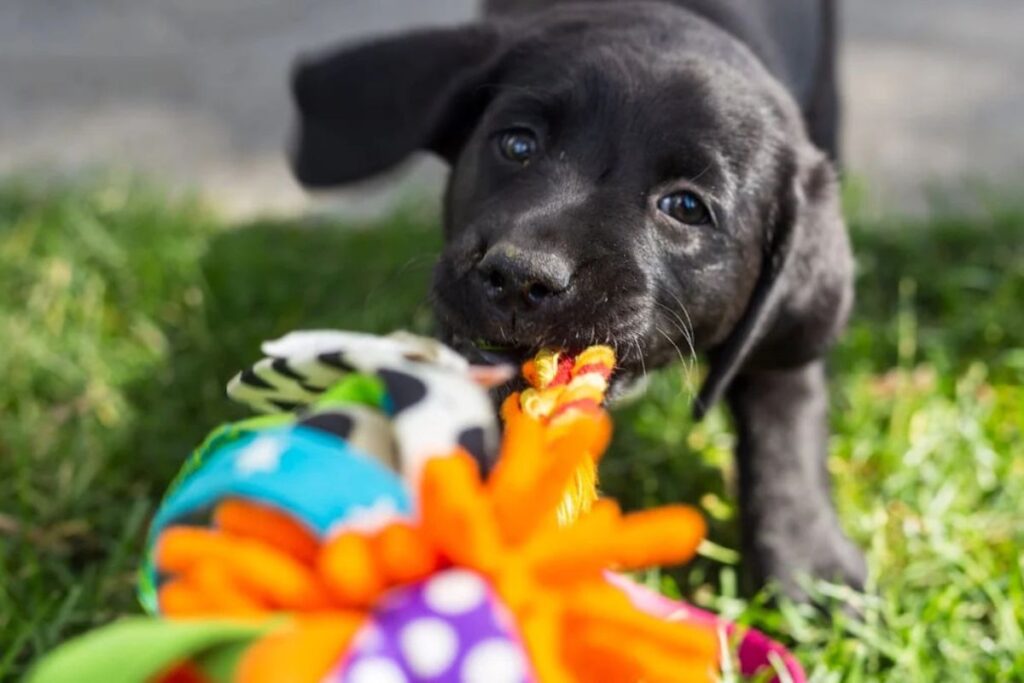
A Labrador Retriever puppy’s health schedule in the first year requires consistent attention. Vaccinations, deworming, and flea and tick prevention are all time-sensitive and should be managed in close coordination with your vet from day one.
Standard health milestones in the first year:
- 6 to 8 weeks — first core vaccinations completed before leaving our care
- 10 to 12 weeks — second vaccination booster
- 14 to 16 weeks — third booster and rabies vaccination (state dependent)
- 6 months — spay/neuter consultation if applicable
- 12 months — annual booster and full health check
Every puppy from PurebredLabradorPuppies.com leaves our care fully vaccinated and dewormed for its age, with a complete written health record provided to you at handover. Our health guarantee requires a veterinary examination within 72 hours of your puppy’s arrival.
Read Our Article
How to Stop Labrador Puppy Biting Fast❤️ Grooming Your Labrador Puppy
Despite having a short, dense coat, the Labrador Retriever is a significant shedder — particularly during seasonal transitions in spring and autumn. Regular grooming keeps the coat healthy, reduces shedding around the home, and gets your puppy comfortable with handling from an early age.
Basic grooming routine:
- Brushing — 2 to 3 times per week with a firm-bristle brush or rubber grooming mitt
- Bathing — every 3 to 4 weeks, or as needed after outdoor adventures
- Ear cleaning — check weekly, clean gently with a vet-approved ear cleaner
- Nail trimming — every 3 to 4 weeks, or when you hear nails clicking on hard floors
- Teeth brushing — begin with puppy toothpaste from 8 weeks to build tolerance
Begin grooming from day one — not because your puppy needs it, but because it builds tolerance and trust. A Labrador that is comfortable with full body handling, ear examination, and nail trimming makes every vet visit significantly easier for both of you.
Raising a Labrador the Right Way
A well-raised Labrador Retriever puppy becomes one of life’s great companions — loyal, playful, endlessly affectionate, and deeply bonded to its family. That outcome is not accidental. It is the result of consistent feeding, patient training, appropriate socialisation, smart exercise, preventative health care, and the kind of everyday attention that builds trust between a dog and its owner.
The foundation starts with a well-bred, well-socialised puppy from a reputable Labrador breeder who has already done the early work before your puppy arrives. At PurebredLabradorPuppies.com, every puppy we place has been home-raised, health-checked, and gently prepared for life with a family. We provide this care guide, ongoing support, and direct access to our team for any question that arises as your puppy grows.
If you are ready to bring home a purebred Labrador Retriever puppy backed by our full health guarantee and breeder support — browse our available litters at purebredlabradorpuppies.com/available-puppies/ and reach out to us today.